Looking at the OTT releases coming up this summer.

The Awami League leaders were charged with committing crimes against humanity over the deaths of hundreds of people during last year's anti-government protests by a student platform. The protests resulted in the ouster of Hasina's 16-year-long regime on August 5.
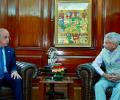
As tensions escalated between India and Pakistan following the deadly Pahalgam terror attack, Iran reached out to both countries, urging de-escalation. Saudi Arabia also expressed concern, with its foreign minister engaging in phone conversations with his Indian and Pakistani counterparts. Iran's foreign minister, Seyed Abbas Araghchi, emphasized the importance of bilateral relations, stating Tehran's willingness to "forge greater understanding" at this critical time. Saudi Arabia's foreign minister, Faisal bin Farhan Al Saud, spoke with both India's External Affairs Minister S Jaishankar and Pakistan's Foreign Minister Mohammad Ishaq Dar. Amidst heightened tensions, India has taken a series of punitive measures against Pakistan, including suspending the Indus Waters Treaty and downgrading diplomatic ties. Pakistan responded by shutting its airspace to Indian airliners and suspending all trade. Both countries exchanged warnings, with Pakistan emphasizing its commitment to "respond firmly to any aggression."
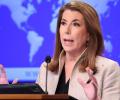
The United States stands strong with India against terrorism and Prime Minister Narendra Modi 'has our full support', the State Department said underlining that Secretary of State Marco Rubio urges India and Pakistan to work towards a responsible resolution that maintains long-term peace and regional stability in South Asia.
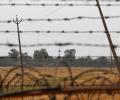
The United States on Thursday said it supports India's right to defend itself and its fight against terrorism as US Defence Secretary Pete Hegseth dialled Defence Minister Rajnath Singh amid rising tensions between India and Pakistan over the Pahalgam terror attack.
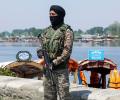
'Diplomatic and economic responses are first announced and then implemented. A military response is announced only after it is done.'
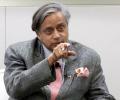
"China is an absolutely impossible factor to ignore in what has been our confrontation with Pakistan," Tharoor said.
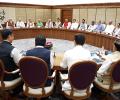
The diplomatic exercise aimed at presenting India's stance against Pakistan on terror comes in the wake of Operation Sindoor -- the Indian offensive against terror camps in Pakistan and Pakistan-occupied Kashmir following the April 22 terror attack in Pahalgam in which 26 people, mostly tourists, were killed.
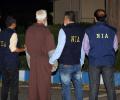
He was sent to judicial custody on May 9 and lodged in Tihar jail after his custodial interrogation by the NIA.

Sources close to the top BJP leadership tell me that Tharoor has already had secret meetings with the BJP's top brass and is waiting patiently to make his next move, reports Ramesh Menon.

India will conduct nationwide civil defense mock drills on Wednesday, including air-raid warning sirens and training civilians to protect themselves in the event of a "hostile attack." The drills come amid rising tensions with Pakistan following the Pahalgam terror attack. The Ministry of Home Affairs has instructed all states and union territories to participate in the exercise, which will be conducted up to the village level.
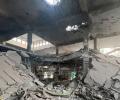
In a strong retaliation to the Pahalgam massacre, India's armed forces early Wednesday destroyed nine terror sites including that of Jaish-e-Mohammad and Lashkar-e-Taiba in Pakistan and Pakistan-occupied Kashmir (PoK) using deep strike missiles in a 25-minute-long 'measured and non-escalatory' mission.
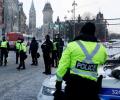
India has lodged a strong protest with Canada over the "threatening language" and "unacceptable imagery" targeting Indian leadership at a parade held in Toronto. The floats at the parade reportedly featured pro-Khalistan propaganda and imagery attacking Indian leaders, including Prime Minister Narendra Modi. India conveyed its concerns to the Canadian High Commission in New Delhi, calling on Canadian authorities to act against "anti-India elements" who are spreading hatred and advocating extremism and a separatist agenda. This incident comes days after Canadian Prime Minister Mark Carney's victory in the general election, which was seen as an opportunity to repair India-Canada ties that had been strained under Justin Trudeau's leadership. The two countries have been grappling with strained relations since Trudeau's allegations in September 2023 of the "potential" involvement of Indian agents in the killing of Hardeep Singh Nijjar on Canadian soil.
India has opposed the International Monetary Fund's (IMF) proposal to extend fresh loans of USD 2.3 billion to Pakistan, citing concerns that the funds could be misused for financing state-sponsored cross-border terrorism. India abstained from voting at the IMF meeting, expressing concerns about Pakistan's track record and the possibility of debt financing being misused for terrorism. The IMF took note of India's statements and its abstention from the vote. India's opposition comes at a time when military conflict between India and Pakistan has intensified following a terrorist attack in Kashmir.
The United Nations Secretary-General, Antonio Guterres, has called for de-escalation between India and Pakistan, expressing deep concern over rising tensions following a terrorist attack in Jammu and Kashmir. Guterres reiterated his condemnation of the attack and urged both sides to avoid a confrontation, which he described as catastrophic. The Secretary-General has also offered his good offices to support de-escalation efforts. The President of the UN General Assembly, Philemon Yang, has also expressed concern over the escalating violence and called for a resolution through diplomatic means. Meanwhile, Pakistan has denied any involvement in the attack and reiterated its commitment to fighting terrorism.

India has strongly rejected Pakistan's claims on Kashmir, calling it a Union Territory and dismissing the Pakistan Army Chief's statement about it being the country's "jugular vein." India also rejected Pakistan's claim that Tahawwur Rana, a Mumbai terror attack accused, is a Canadian citizen and that it has nothing to do with him. India's External Affairs Ministry spokesperson stated that Pakistan's reputation as the "epicentre" of global terrorism will not diminish. Rana's extradition is a reminder that Pakistan needs to bring other perpetrators of the Mumbai terror attacks to justice, according to India.
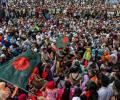
Government employees in Bangladesh locked down the main gate of the Bangladesh Secretariat in Dhaka, protesting a new service law that allows for easier dismissal of officials for misconduct. The protest, which lasted for about half an hour, disrupted government operations. The employees also threatened to continue their protests until the ordinance was scrapped. Meanwhile, the protest by employees of the Dhaka South City Corporation, demanding the installation of BNP leader Ishraque Hossain as its mayor, has brought administrative services to a halt. These protests, coupled with concerns raised by the business community and the military, highlight a growing sense of unease in Bangladesh over the policies of the interim government.
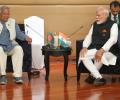
A former Bangladesh army officer and close aide of Chief Adviser Muhammad Yunus has suggested that Dhaka should collaborate with China to occupy India's northeastern states if it attacks Pakistan in response to the Pahalgam terror attack. Bangladesh's interim government has distanced itself from the remarks made by Major General (Retd) ALM Fazlur Rahman on his social media account. Rahman's comments come amidst growing tensions between India and Bangladesh following Yunus' remarks in China about India's northeastern states being landlocked and needing Bangladesh's access to the ocean. These incidents have further strained relations between the two countries, with India withdrawing transhipment facilities granted to Bangladesh for exporting goods to the Middle East, Europe, and various other countries.

Prime Minister Narendra Modi held a meeting with National Security Advisor Ajit Doval and External Affairs Minister S Jaishankar upon his arrival from Saudi Arabia to take stock of the situation following the terror attack in Pahalgam, Kashmir. The meeting also included Foreign Secretary Vikram Misri. The attack, which killed at least 26 people, including tourists from the UAE and Nepal, has sparked nationwide shock and outrage.
In the letter issued, considering the last night attacks by Pakistani forces in Jammu and Jaisalmer regions, the provision also authorises the use of local authority funds for such emergency measures, giving them precedence over other financial obligations.

India has confirmed that 12 Indian nationals have died while serving in the Russian military during the ongoing conflict in Ukraine. Another 16 Indians, who were serving in the Russian armed forces, are listed as missing by Russia. The Ministry of External Affairs (MEA) spokesperson Randhir Jaiswal said a total of 126 Indians were serving with the Russian military and 96 of them have so far been discharged.
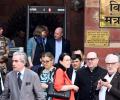
India briefed envoys of the US, UK, France, China, Russia, Germany and several other countries on the Pahalgam terror attack and its link to cross-border terrorism. Foreign Secretary Vikram Misri apprised the diplomats about various aspects of the dastardly terror attack on innocent civilians and India's firm policy of "zero tolerance" against terrorism. The briefing was held a day after India announced a raft of measures against Pakistan including expulsion of Pakistani military attaches, suspension of the Indus Water Treaty of 1960 and immediate shutting down of the Attari land-transit post. The Cabinet Committee on Security headed by Prime Minister Narendra Modi firmed up the punitive measures against Pakistan in view of the cross-border links to the Pahalgam attack that killed 26 people. Diplomats of Oman, the United Arab Emirates, Qatar, Norway, Italy, Indonesia and Malaysia were also part of the briefing. Prime Minister Narendra Modi vowed to punish terrorists behind the strike and said India's spirit will never be broken by terrorism.

India-Canada ties saw tensions after Prime Minister Justin Trudeau in September 2023 in the House of Commons said there were "credible allegations" of a potential link between Indian agents and the killing of pro-Khalistan separatist leader Hardeep Singh Nijjar in Surrey, British Columbia.
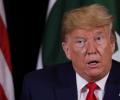
Pakistan's Ambassador to the US, Rizwan Saeed Sheikh, has urged President Donald Trump to help ease tensions with India, highlighting the Kashmir issue as a "flash point" in nuclear terms. He believes that the US should take a more comprehensive and sustained approach to address the situation rather than just immediate de-escalatory measures.
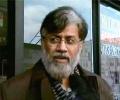
The central government has appointed advocate Narender Mann as special public prosecutor to conduct trials and other matters related to the National Investigation Agency case RC-04/2009/NIA/DLI against Tahawwur Hussain Rana and David Coleman Headley, who is in a US prison following a plea deal.

India's Foreign Secretary Vikram Misri said on Thursday that the choice of de-escalation is with Pakistan, as India only responded to the April 22 Pahalgam terror attack, which killed 26 people. He added that Pakistan has been escalating the situation with cross-border terrorism against India for decades.
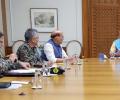
India has called Pakistan's nuclear bluff with Operation Sindoor and sent a psychological message to state-sponsored terrorists: nobody is untouchable and no place in Pakistan is safe for you, government sources said on Sunday.

India on Thursday night swiftly foiled Pakistan's attempts to hit various key Indian installations including military stations at Jammu, Pathankot and Udhampur with drones and missiles, the defence ministry said.

Most deaths were due to smoke inhalation while residents were sleeping, and a significant number of occupants were evacuated, they added. The fire started in a kitchen in the six-storey building in the Mangaf area in Kuwait's southern Ahmadi Governorate, officials said, adding that the building reportedly had 195 people living in it, who are workers of the same company.
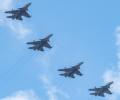
Pakistani military targets at Rafiqui, Murid, Chaklala, Rahim Yar Khan, Sukkur and Chunian were engaged using air-launched precision weapons from Indian fighter jets and the retaliation largely focused on command and control centres, radar sites and weapon storage areas, Qureshi said.
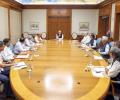
The Cabinet Committee on Security (CCS) met on Wednesday under the chairmanship of Prime Minister Narendra Modi and firmed up the responses to the terror attack.
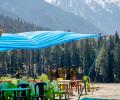
The entry and exit points are being closely scrutinised by the investigating NIA teams for clues to the modus operandi of the terrorists, the officials said.
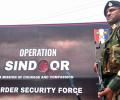
Their shared brief: To assert India's case with clarity, rebut hostile narratives, and secure enduring partnerships for global counter-terror cooperation.

Vikas Yadav, 39, was employed by the Cabinet Secretariat, which houses India's foreign intelligence service, the Research and Analysis Wing (RAW), the federal prosecutors claimed on Thursday in an indictment filed in a US court in New York.

Pakistan has banned Indian-flagged ships from entering its ports with immediate effect after India imposed fresh punitive measures, including a ban on the import of goods and entry of Pakistani vessels into its ports, against Islamabad amid heightened tensions following the Pahalgam terror attack. The move comes after India announced a raft of punitive measures against Pakistan, including the suspension of the Indus Waters Treaty, shutting down of the only operational land border crossing at Attari, and downgrading of diplomatic ties following the terror attack. The Pakistan Army has also conducted a successful training launch of the Abdali Weapon System, a surface-to-surface missile with a range of 450 km, saying it was aimed at ensuring the operational readiness of troops and validating key technical parameters. India considers the test launch of the ballistic missile a "blatant" act of "provocation."
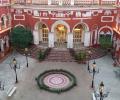
Rajbaris are a link to Bengal's rich past, of grand mansions, classical fine dining, and allow guests to be pretend zamindars for those few hours or days that they stay.

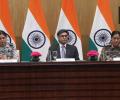
Colonel Sofiya Qureshi revealed that 300 to 400 drones were deployed across 36 locations, with several being shot down by Indian forces using both kinetic and non-kinetic methods.

India succeeded in busting the Pakistani narrative on Operation Sindoor, particularly among the Organisation of Islamic Conference (OIC) member nations, where Islamabad sought succour after carrying out terror activities across the border, Shiv Sena leader Shrikant Shinde said.
External Affairs Minister S Jaishankar said the 2008 Mumbai terror attack marked a turning point in relations with Pakistan when Indians collectively felt that such behaviour from a neighbouring country could no longer be tolerated. Speaking at Charotar University of Science and Technology, Jaishankar acknowledged India's transformation under Prime Minister Narendra Modi over the last decade, while Pakistan has remained unchanged, continuing with what he termed as its "bad habits."
